
“How to install and wire an off-grid solar power system
However, installing and wiring an off-grid solar power system can be a complex and daunting task, especially for those without prior experience. In this article, we will provide a step-by-step guide on how to install and wire an off-grid solar power system, helping you to navigate the process with confidence.
Understanding the Basics of Off-Grid Solar Power Systems
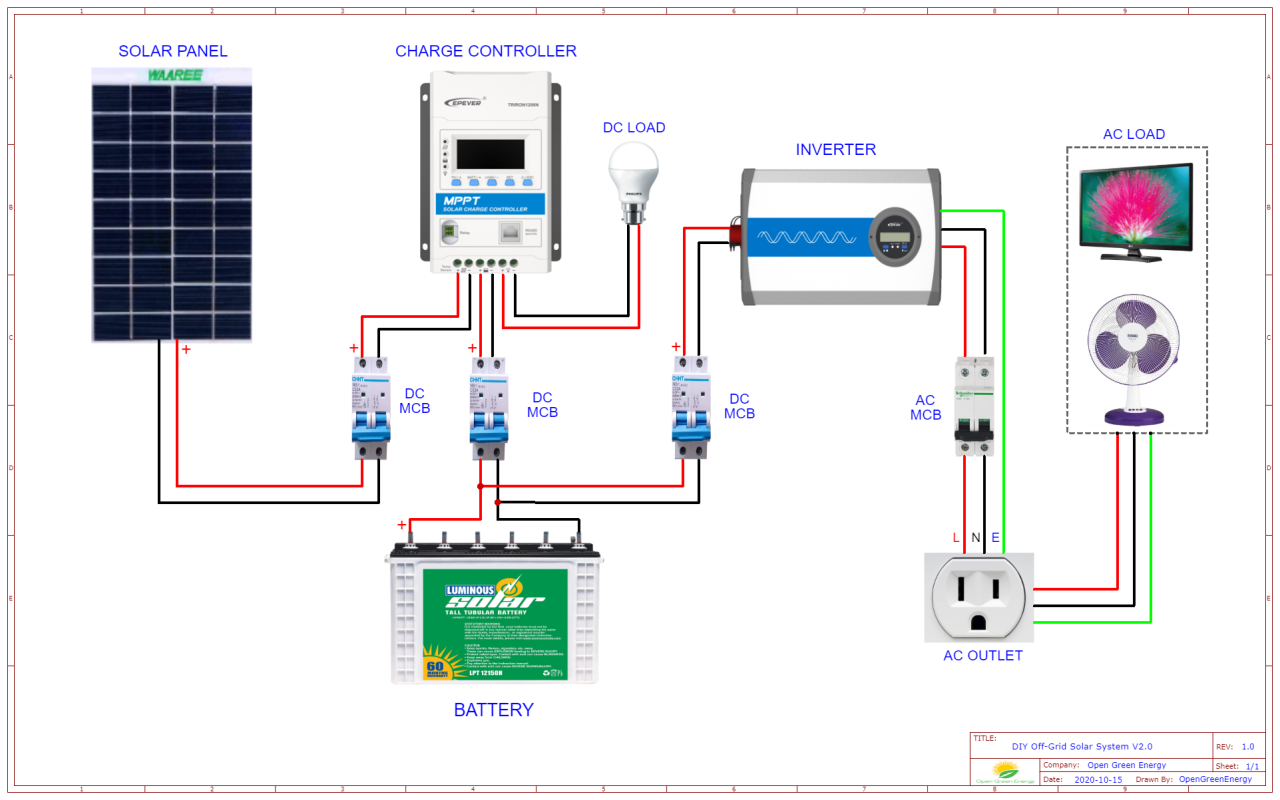
Before we dive into the installation and wiring process, it’s essential to understand the basics of off-grid solar power systems. An off-grid solar power system is a self-contained system that generates electricity from sunlight and stores it in a battery bank for later use. The system consists of several components, including:
- Solar Panels: These are the photovoltaic (PV) panels that convert sunlight into electrical energy.
- Charge Controller: This device regulates the flow of energy from the solar panels to the battery bank, preventing overcharging and damage to the batteries.
- Battery Bank: This is the storage system that holds the generated electricity for later use.
- Inverter/Charger: This device converts the DC power from the battery bank into AC power, which is usable by household appliances.
- Mounting System: This includes the racks and brackets that secure the solar panels in place.
Pre-Installation Checks
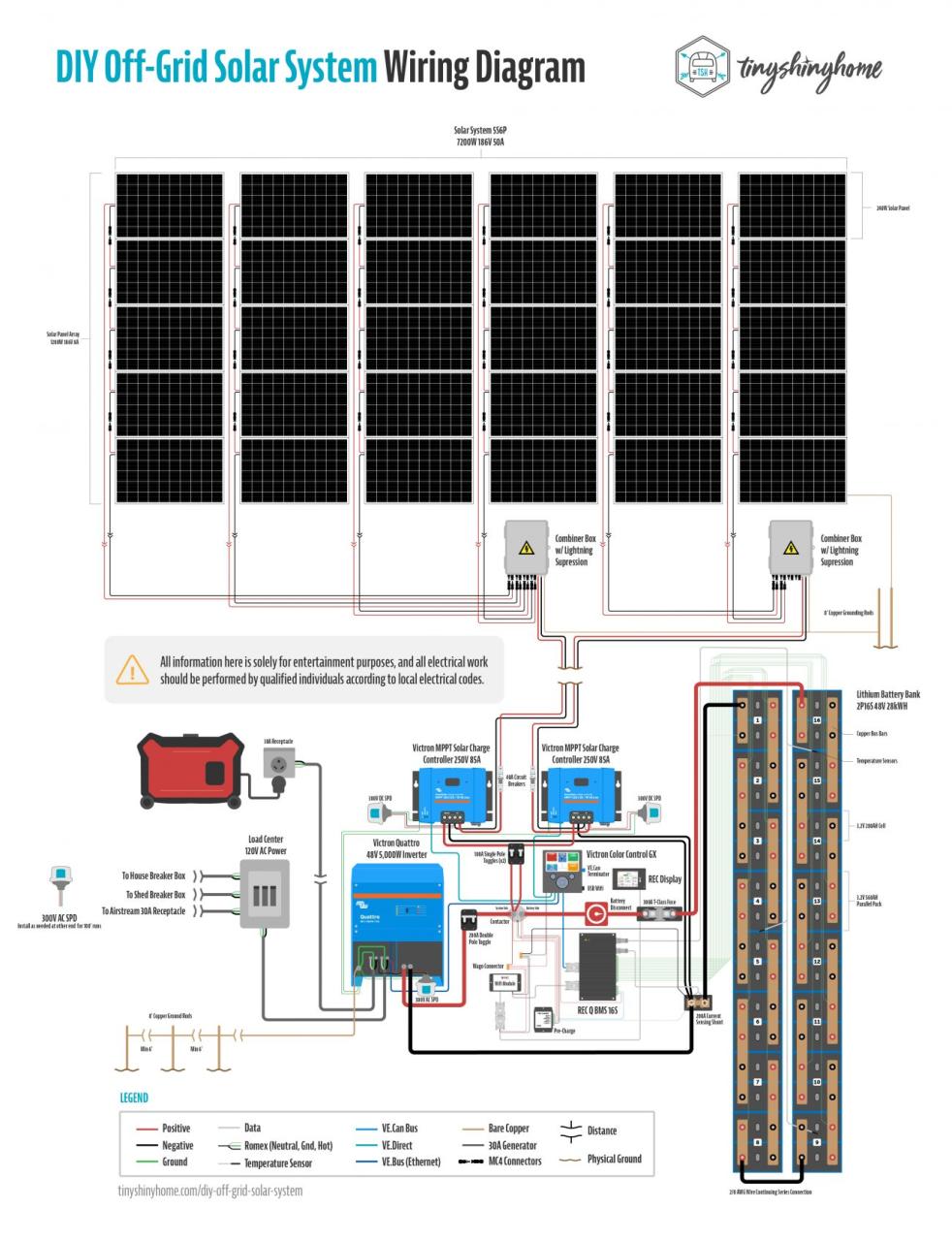
Before starting the installation process, it’s essential to perform a series of pre-installation checks to ensure that your system is properly sized and configured for your specific needs. These checks include:
- Energy Requirements: Calculate your daily energy requirements to determine the size of the solar panel array and battery bank needed.
- Site Assessment: Assess the site where the solar panels will be installed, taking into account factors such as sunlight hours, shading, and wind loads.
- Electrical Panel Upgrade: Check if your electrical panel needs to be upgraded to accommodate the off-grid solar power system.
- Battery Bank Sizing: Calculate the size of the battery bank based on your energy requirements and the depth of discharge (DOD) of the batteries.
Installation and Wiring Process
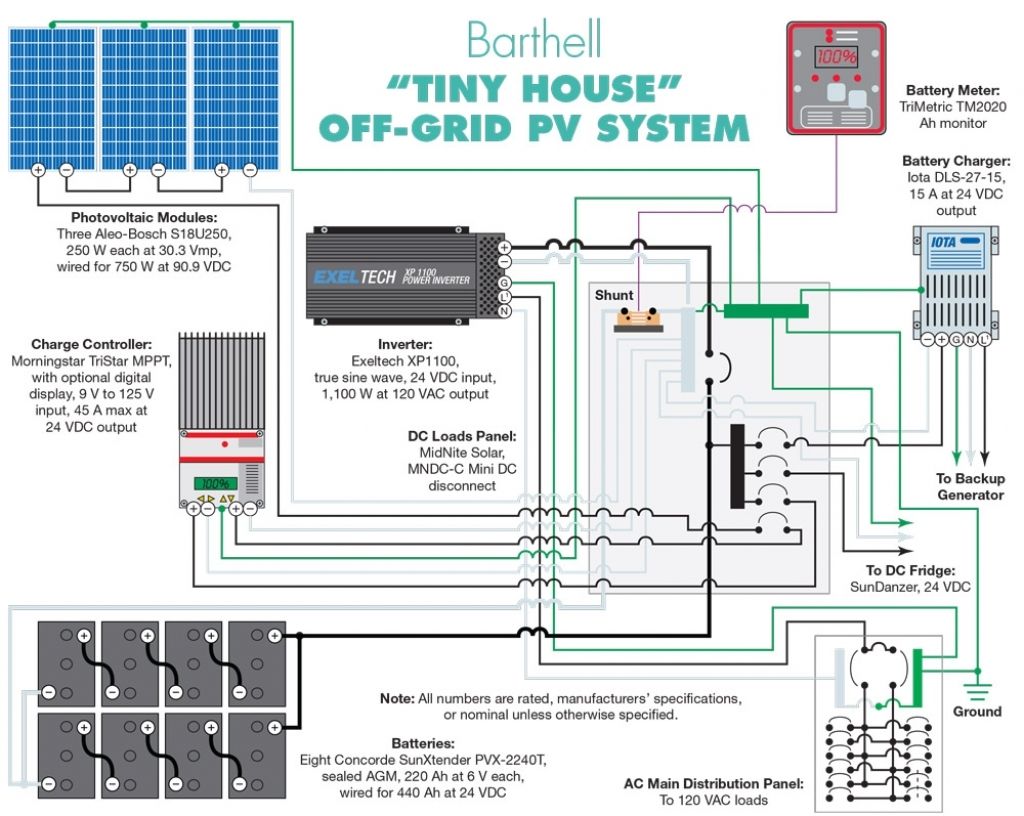
With the pre-installation checks complete, it’s time to start the installation and wiring process. Here’s a step-by-step guide:
Step 1: Mounting the Solar Panels
- Choose a suitable location: Select a location that receives direct sunlight for most of the day, with minimal shading.
- Install the mounting system: Install the mounting system, ensuring that it is level and securely fastened to the roof or ground.
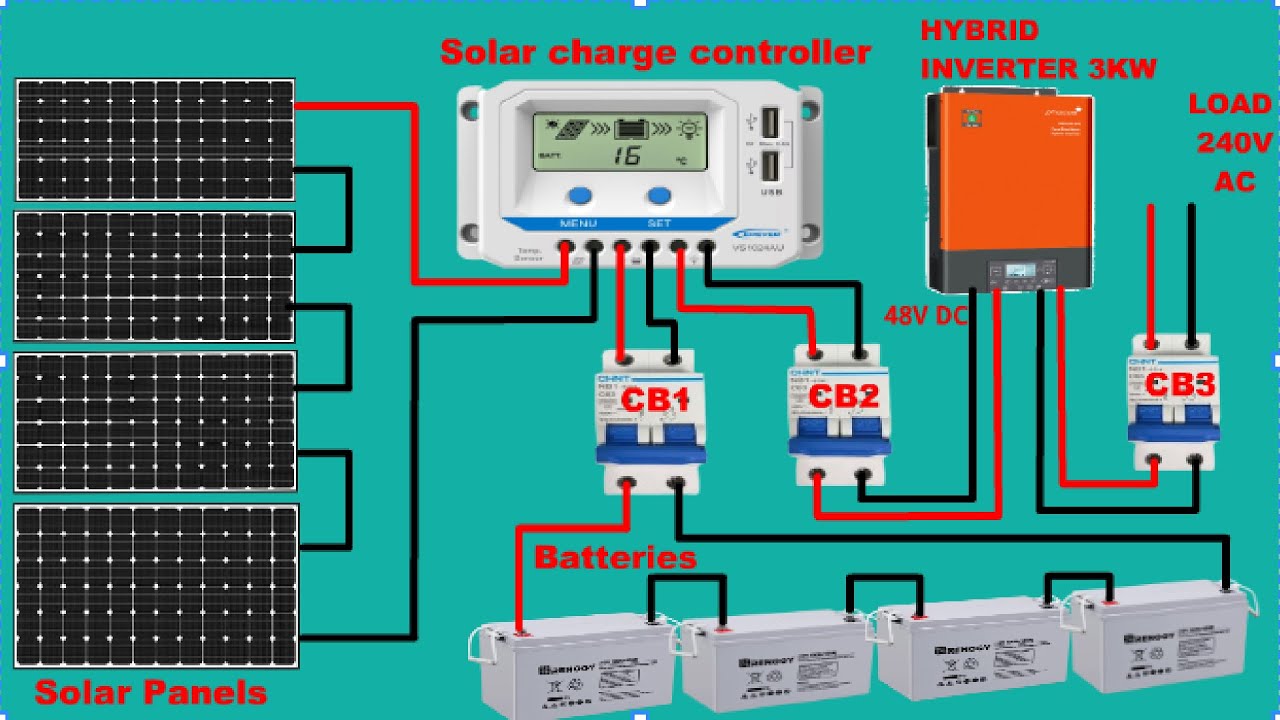
- Install the solar panels: Mount the solar panels to the mounting system, ensuring that they are securely fastened and connected to each other in a series-parallel configuration.
Step 2: Installing the Charge Controller
- Choose a suitable location: Install the charge controller in a dry, well-ventilated area, close to the battery bank.
- Connect the solar panels to the charge controller: Connect the solar panels to the charge controller, ensuring that the positive and negative terminals are correctly matched.
- Configure the charge controller: Configure the charge controller according to the manufacturer’s instructions, setting the charging parameters and monitoring the system’s performance.
Step 3: Installing the Battery Bank
- Choose a suitable location: Install the battery bank in a dry, well-ventilated area, close to the charge controller.
- Connect the batteries: Connect the batteries in a series-parallel configuration, ensuring that the positive and negative terminals are correctly matched.
- Configure the battery monitor: Configure the battery monitor according to the manufacturer’s instructions, setting the monitoring parameters and alerts.
Step 4: Installing the Inverter/Charger
- Choose a suitable location: Install the inverter/charger in a dry, well-ventilated area, close to the battery bank.
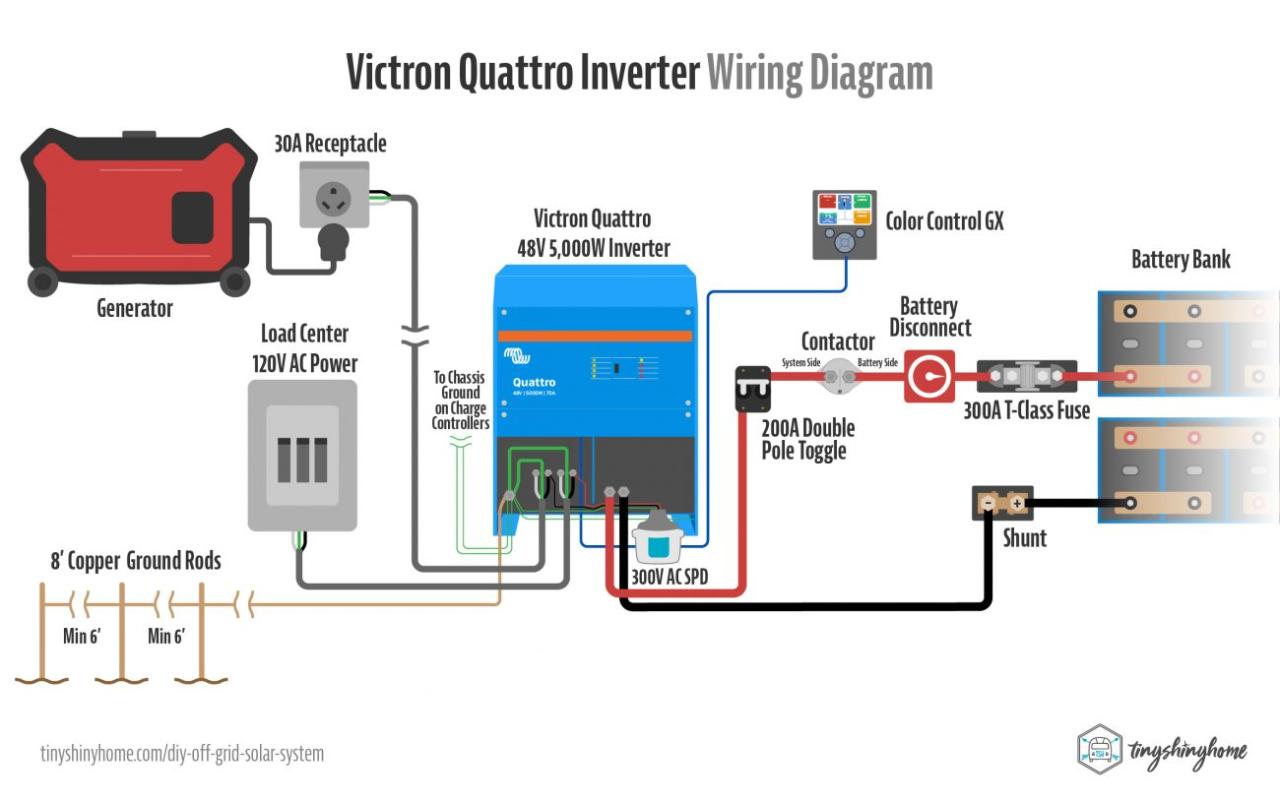
- Connect the battery bank to the inverter/charger: Connect the battery bank to the inverter/charger, ensuring that the positive and negative terminals are correctly matched.
- Configure the inverter/charger: Configure the inverter/charger according to the manufacturer’s instructions, setting the charging parameters and monitoring the system’s performance.
Step 5: Connecting the Load
- Connect the inverter/charger to the electrical panel: Connect the inverter/charger to the electrical panel, ensuring that the wiring is correctly sized and matched.
- Connect the loads: Connect the loads to the electrical panel, ensuring that they are compatible with the off-grid solar power system.
Safety Considerations
When installing and wiring an off-grid solar power system, it’s essential to take safety considerations into account. These include:
- Electrical shock: Ensure that all electrical connections are secure and insulated to prevent electrical shock.
- Fire hazards: Ensure that all components are installed and wired correctly to prevent fire hazards.
- Personal protective equipment: Wear personal protective equipment, such as gloves and safety glasses, when working with electrical systems.
Maintenance and Troubleshooting
Regular maintenance and troubleshooting are essential to ensure that your off-grid solar power system operates efficiently and safely. These include:
- Monitor the system’s performance: Monitor the system’s performance regularly, checking for any errors or issues.
- Clean the solar panels: Clean the solar panels regularly to ensure maximum energy production.
- Check the battery bank: Check the battery bank regularly, ensuring that the batteries are properly charged and maintained.
Conclusion
Installing and wiring an off-grid solar power system can be a complex and daunting task, but with the right guidance and precautions, it can be a rewarding and sustainable way to generate electricity. By following the steps outlined in this article, you can ensure that your system is properly sized, configured, and installed, providing you with a reliable and efficient source of renewable energy. Remember to always take safety considerations into account and perform regular maintenance and troubleshooting to ensure that your system operates efficiently and safely.
Leave a Reply